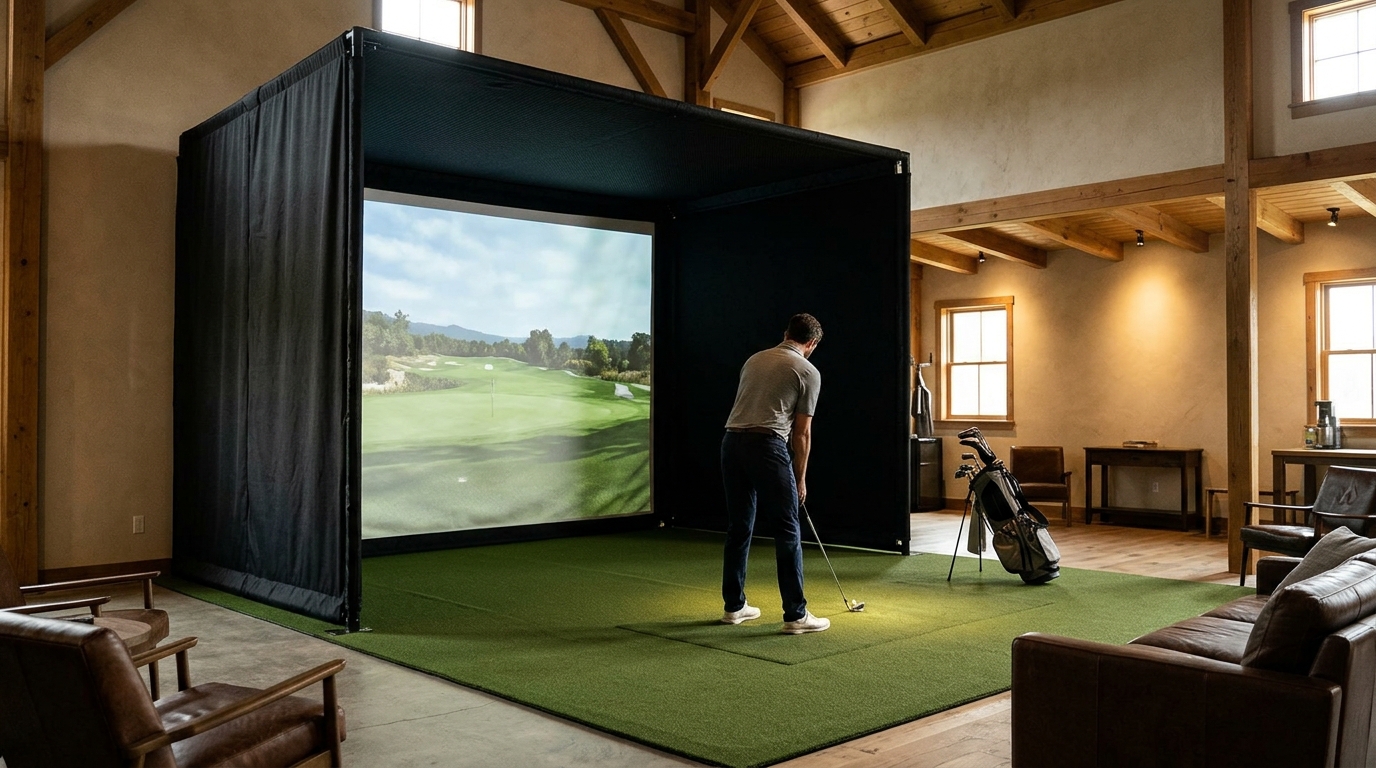
Before buying a golf simulator enclosure for your home, you must verify your room dimensions, ceiling height, and safety requirements. A golf simulator enclosure is a physical structure that protects your walls, ceiling, and family from errant golf balls while providing a surface for projection. Turnkey Pro Studios emphasizes that the enclosure is the foundation of your studio, determining both safety and visual immersion. Ignoring these structural constraints leads to costly modifications or unsafe practice environments.
Measure Your Space Before You Buy
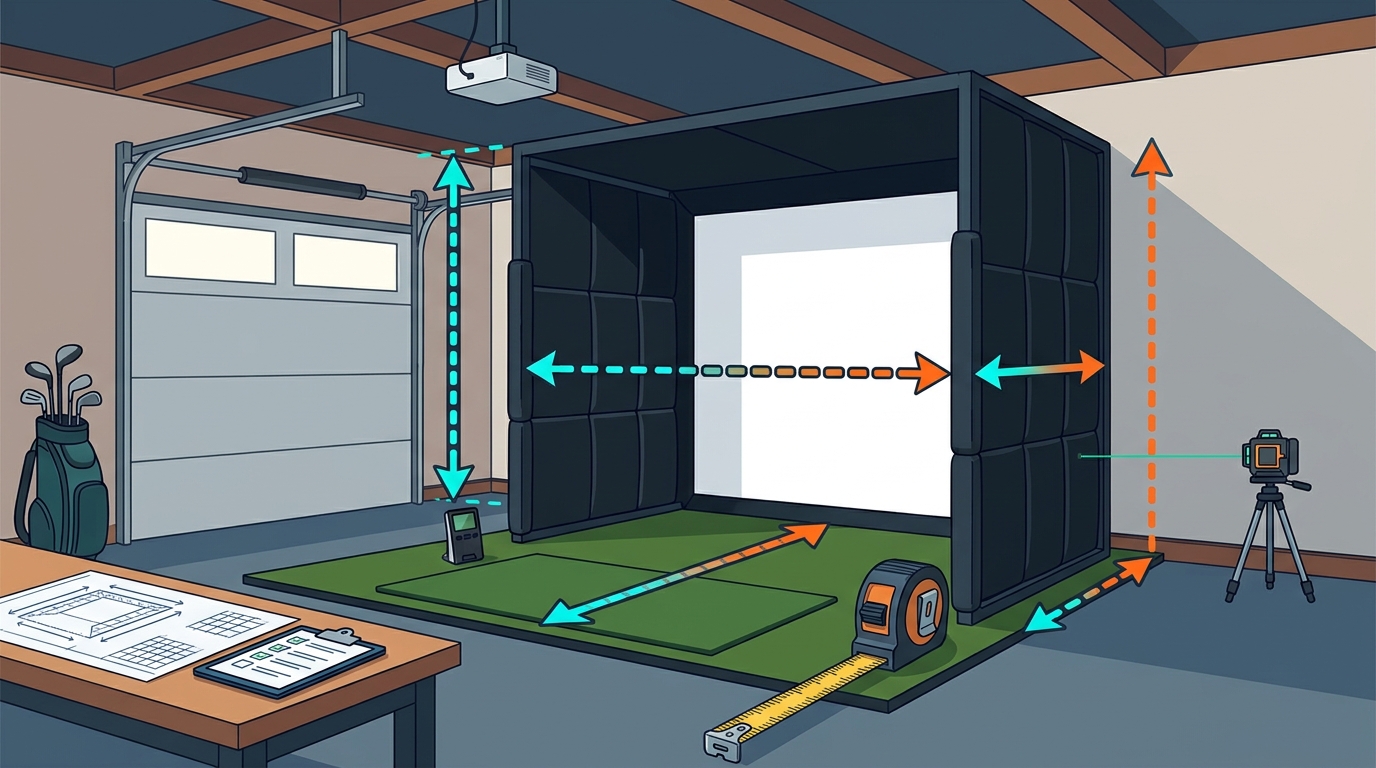
The most common mistake buyers make is purchasing an enclosure that does not fit their available space. You need to measure the width, depth, and height of your intended room. A standard home garage is often 10 to 12 feet wide, but you need at least 10 feet of clear width for a comfortable hitting area. Ceiling height is equally critical. Most projector-based simulators require a minimum of 9 feet of clearance to project a large, undistorted image. If your ceiling is lower, you may need a shorter throw lens or a different enclosure type. Turnkey Pro Studios offers pre-purchase layout checks to ensure your specific room dimensions align with the chosen hardware.
Choose the Right Enclosure Type
There are three primary types of home enclosures: built-in, retractable, and freestanding. A built-in enclosure is a permanent structure that is installed into the walls and ceiling of your room. It offers the best aesthetics and maximum safety but requires professional installation. A retractable enclosure is a portable system that folds away when not in use, making it ideal for garages or multi-purpose rooms. A freestanding enclosure is a self-contained unit that does not attach to your walls, offering the easiest setup but potentially less stability. For most homeowners, a retractable system provides the best balance of convenience and protection. Turnkey Pro Studios provides both built-in and retractable options to suit different lifestyles and room configurations.
Understand Safety and Impact Protection
Safety is the primary function of any golf simulator enclosure. The enclosure must be designed to stop golf balls at high speeds. Look for enclosures with impact-resistant materials and proper padding. A golf simulator enclosure is not just a screen; it is a safety barrier. The back wall and side walls must be able to withstand the impact of a full-speed drive. Some enclosures use foam padding, while others use rigid panels with soft backing. Turnkey Pro Studios includes safety foam padding in many of its packages to ensure that errant shots do not damage your home or injure anyone. Always verify that the enclosure meets safety standards for indoor golf practice.
Consider Projection and Lighting
The enclosure also affects the quality of your projected image. Ambient light can wash out the projection, making it difficult to see the virtual course. A golf simulator enclosure is often designed to block external light, creating a dark, immersive environment. This is especially important for projector-based systems, which are sensitive to light. If you plan to use your simulator in a room with windows or bright lighting, consider an enclosure with blackout capabilities. Turnkey Pro Studios recommends using enclosures that can be closed or covered to minimize light interference. This ensures that your simulation experience is as realistic and enjoyable as possible.
Plan for Installation and Maintenance
Installing a golf simulator enclosure is not a simple DIY project for most homeowners. Built-in enclosures require drilling, mounting, and electrical work. Retractable enclosures are easier to install but still require careful placement and anchoring. A golf simulator enclosure is a significant investment, and proper installation is key to its longevity and performance. Turnkey Pro Studios provides full-cycle support, from pre-purchase layout checks to post-delivery install support. This ensures that your enclosure is installed correctly and safely. Regular maintenance, such as checking for wear and tear on padding and screens, is also important to keep your simulator in top condition.
Key Takeaways
- Measure your room width, depth, and ceiling height before purchasing an enclosure.
- Choose an enclosure type that fits your lifestyle, such as built-in, retractable, or freestanding.
- Ensure the enclosure has adequate impact protection and safety padding.
- Consider lighting and projection quality when selecting your enclosure.
- Plan for professional installation and regular maintenance to ensure safety and longevity.
- Turnkey Pro Studios offers tailored recommendations and full-cycle support for your home golf simulator.
Frequently Asked Questions
What is the minimum ceiling height for a golf simulator enclosure?
Most projector-based golf simulators require a minimum ceiling height of 9 feet. This allows for a large, undistorted projection. If your ceiling is lower, you may need a shorter throw lens or a different type of enclosure. Turnkey Pro Studios can help you determine the best setup for your specific room dimensions.
Can I install a golf simulator enclosure in a garage?
Yes, a garage is one of the most popular locations for a home golf simulator. A retractable enclosure is ideal for garages, as it can be folded away when not in use. Ensure that your garage has adequate lighting control and a level floor for the best experience. Turnkey Pro Studios offers retractable enclosures that are perfect for garage installations.
How much does a golf simulator enclosure cost?
The cost of a golf simulator enclosure varies widely depending on the type and features. Retractable enclosures are generally less expensive than built-in enclosures. Prices can range from a few thousand dollars to over ten thousand dollars. Turnkey Pro Studios offers a range of options to fit different budgets, and you can request a custom layout session to get a tailored quote.
Do I need a professional to install a golf simulator enclosure?
While some retractable enclosures can be installed by homeowners, built-in enclosures typically require professional installation. Professional installation ensures that the enclosure is secure, safe, and properly aligned. Turnkey Pro Studios provides full-cycle support, including post-delivery install support, to ensure your simulator is set up correctly.
What materials are used in golf simulator enclosures?
Golf simulator enclosures are made from a variety of materials, including impact-resistant panels, foam padding, and durable fabrics. The back wall and side walls must be able to withstand the impact of golf balls. Turnkey Pro Studios uses high-quality materials to ensure safety and durability in all of its enclosure packages.
Start Your Home Golf Studio
Building a home golf simulator is an exciting investment in your game and your home. By understanding the key factors in choosing an enclosure, you can ensure a safe, immersive, and enjoyable experience. Turnkey Pro Studios is here to guide you through every step of the process, from initial consultation to final installation. To plan your visit, contact our team for a personalized recommendation. Learn more: Our company.