
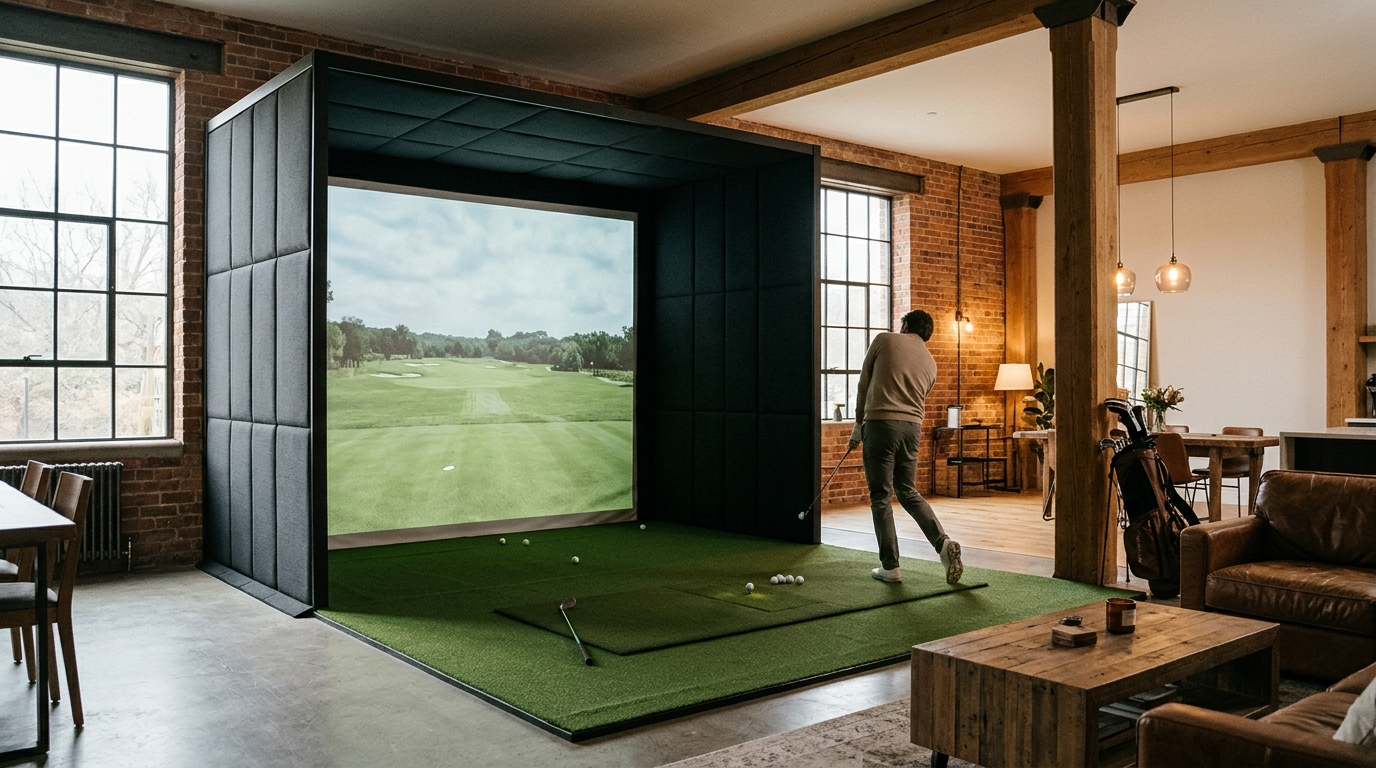
Choosing the right enclosure is the most critical step in building a functional home golf bay. A proper structure protects your walls, contains errant shots, and defines the playable area for your launch monitor. Turnkey Pro Studios specializes in pairing these structural elements with premium technology to create a seamless, ready-to-play environment.
1. Free-Standing Enclosures
Best for: Dedicated rooms with ample floor space.
2. Retractable Enclosures
Best for: Multi-purpose rooms where you need to reclaim space.
A retractable enclosure is a collapsible frame system that folds away when you are not playing. This type of structure is ideal for living rooms or garages that serve other functions, such as parking a car or storing equipment. The mechanism allows you to deploy the bay in minutes and stow it completely, ensuring your home remains uncluttered during non-golf hours.
3. Built-In Enclosures
Best for: Custom builds and high-end dedicated studios.
A built-in enclosure is a custom-fabricated structure that integrates directly into your room's architecture, often using existing walls and ceiling space. This approach maximizes the usable hitting area by eliminating the need for a standalone frame. It provides a sleek, professional look and is the preferred choice for commercial-grade home setups where aesthetics and space efficiency are paramount.
4. Net-Only Configurations
Best for: Budget-conscious builders with high ceilings.
A net-only configuration is a minimal setup that relies on a heavy-duty net and a frame without solid side or back walls. This option is the most affordable entry point into indoor golf and is suitable for rooms with high ceilings and no fragile items nearby. While it offers less protection than a full enclosure, it is sufficient for casual play and basic launch monitor tracking.
5. Hybrid Wall-and-Net Systems
Best for: Rooms with one solid wall and open sides.
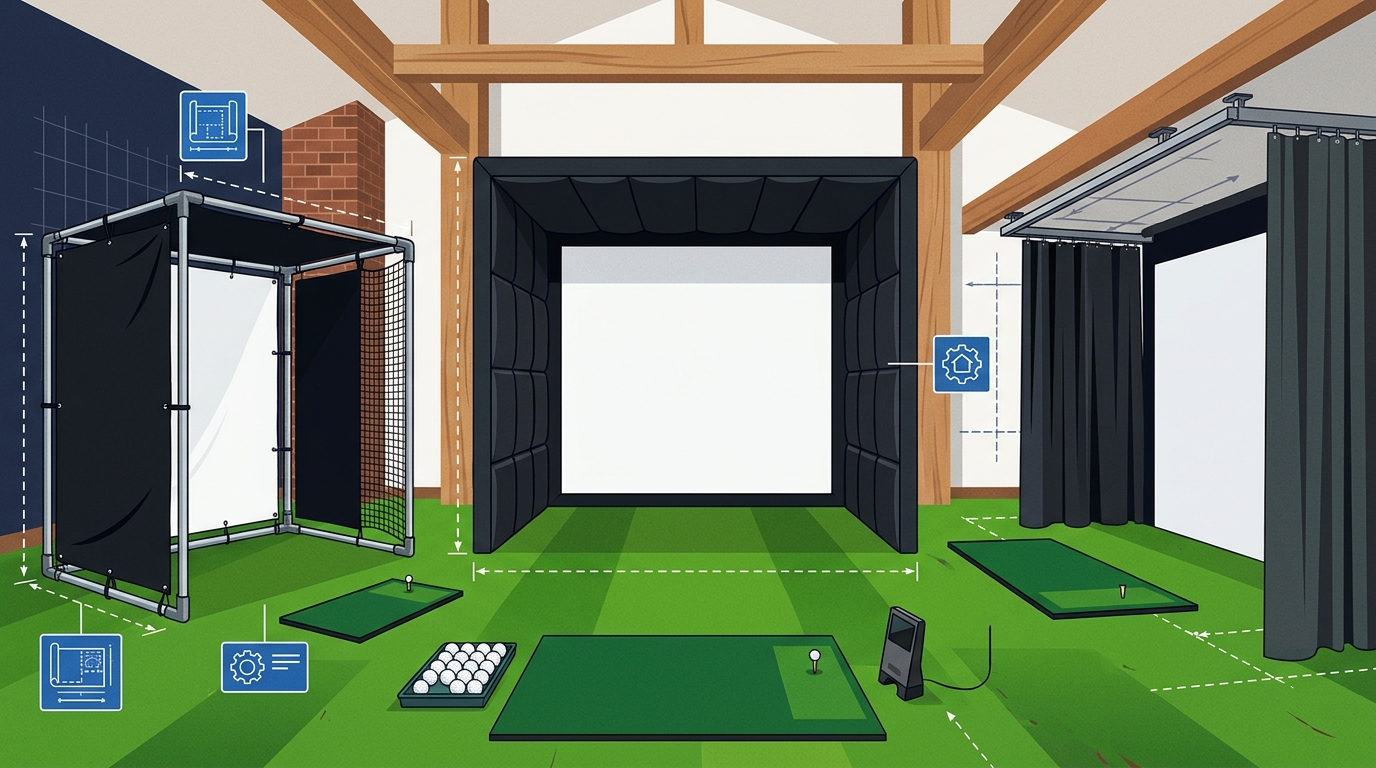
A hybrid system is a structure that combines solid panels on the sides with netting on the back or top. This design balances cost and protection, allowing you to use an existing wall as the backstop while adding safety netting to the open areas. It is a practical solution for garages where one side is a garage door or a solid wall, reducing the amount of material needed for the frame.
6. Ceiling-Mounted Retractable Screens
Best for: Small rooms with limited floor space.
A ceiling-mounted screen is a projection surface that retracts into the ceiling, often paired with a lightweight floor frame. This type of enclosure minimizes the floor footprint by eliminating the need for a large rear frame. It is particularly effective in smaller basements or attics where every square foot of floor space is valuable for the hitting mat and player movement.
7. Commercial-Grade Modular Bays
Best for: High-traffic home studios or multi-player setups.
Choosing the Right Enclosure for Your Space
Selecting the best enclosure depends on your room's dimensions, ceiling height, and how you plan to use the space. Measure your available area carefully and consider whether you need a permanent structure or a flexible, stowable system. Turnkey Pro Studios offers expert guidance to help you match the right enclosure type to your specific room layout and equipment needs.
Frequently Asked Questions
What is the minimum ceiling height for a golf simulator enclosure?
Most golf simulator enclosures require a minimum ceiling height of 9 to 10 feet to accommodate the projection screen and allow for a full swing without interference. Lower ceilings may limit the types of clubs you can use or require a specialized low-profile setup.
Can I use a golf simulator enclosure in a garage?
Yes, garages are one of the most popular locations for home golf simulators. The key is to ensure the floor is level and the ceiling height is sufficient. A free-standing or built-in enclosure works well in a garage, provided you account for the garage door and any stored items.
How much space does a retractable golf enclosure take up when stowed?
Retractable enclosures typically fold down to a compact size, allowing them to be stored against a wall or in a closet. This makes them ideal for multi-purpose rooms where you need to reclaim floor space after playing.
Do I need a special floor for my golf simulator enclosure?
While a concrete or hardwood floor is ideal, you can use a golf simulator in a room with carpet or tile. However, you will need a high-quality hitting mat to protect the floor and provide a consistent ball strike. The enclosure itself does not require a special floor, but the hitting area does.
What is the difference between a free-standing and a built-in enclosure?
How do I choose the right enclosure for my launch monitor?
Your launch monitor determines the required screen size and projection distance, which in turn dictates the enclosure dimensions. Ensure the enclosure you choose provides enough depth for the projection throw and width for the screen. Turnkey Pro Studios can help you verify compatibility between your chosen monitor and enclosure. Learn more: Turnkey Pro Studios.