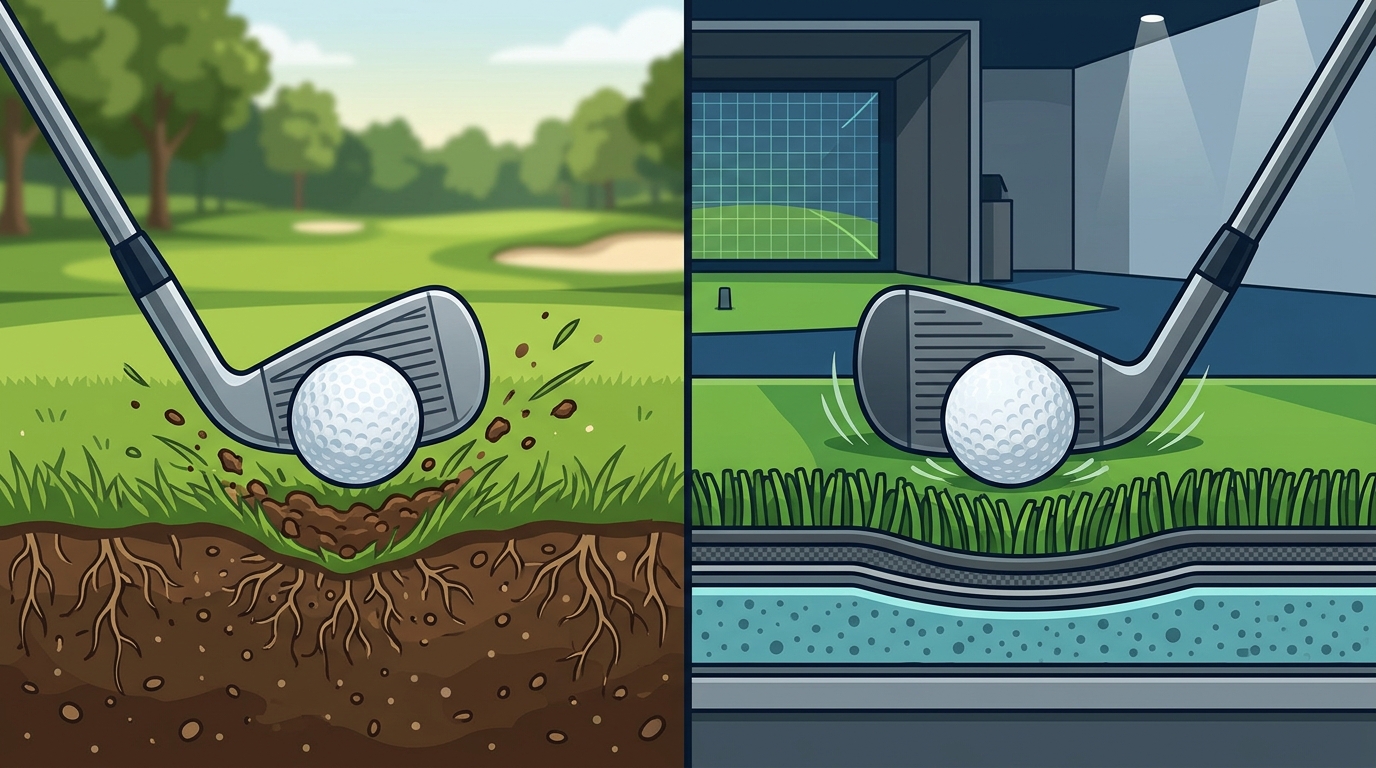
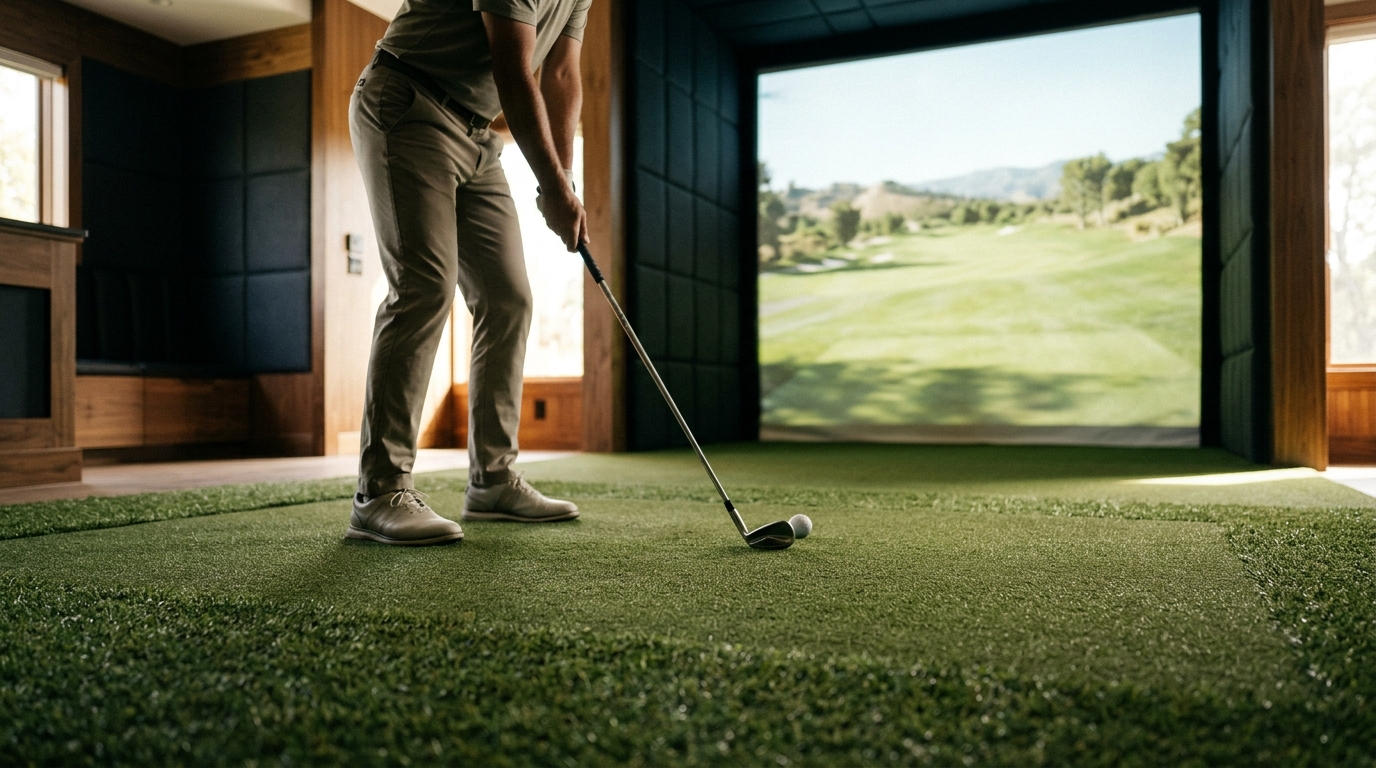
Home simulator turf mimics real grass by replicating the friction and give of natural fairways. While it lacks the organic irregularity of a living lawn, modern synthetic surfaces provide consistent ball response and divot depth. This consistency allows players to focus on swing mechanics rather than surface variables. Turnkey Pro Studios designs these systems to bridge the gap between indoor practice and outdoor play.
The Physics of Synthetic Surface Interaction
Understanding how a golf ball interacts with a surface requires analyzing friction coefficients and material density. Simulator turf is a synthetic material engineered to replicate the friction and give of natural grass. Real grass varies daily based on moisture, dew, and mowing height. Synthetic turf maintains a static friction coefficient, ensuring that a 7-iron behaves the same way on Monday as it does on Friday. This stability is critical for data-driven practice. When using a launch monitor, consistent surface interaction ensures that the data you collect reflects your swing, not the surface. Learn more: Our company.