
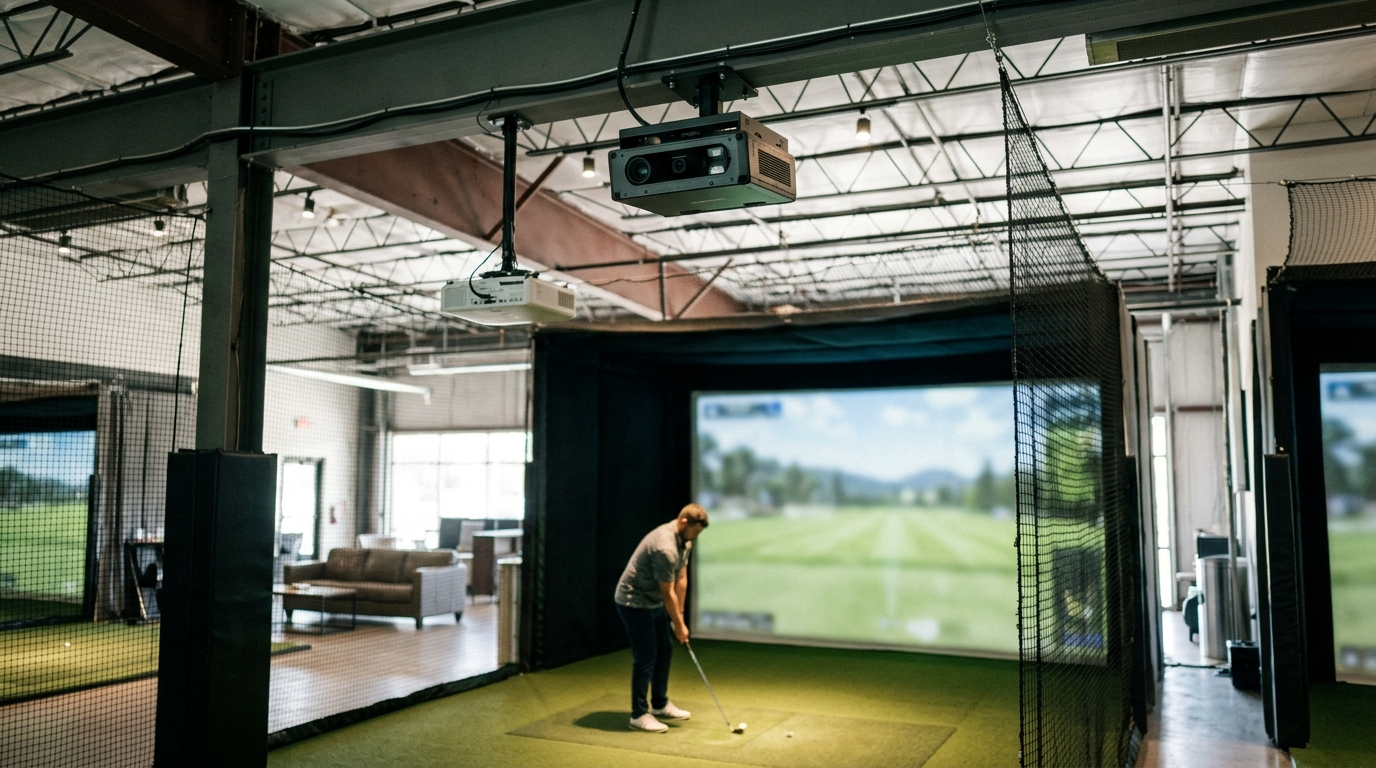
Before buying an overhead launch monitor for a commercial golf simulator space, you must verify ceiling height, structural load capacity, and software licensing costs. Overhead launch monitor is a camera-based tracking system mounted above the hitting zone that captures ball flight data without requiring a ground-based radar unit. Facility managers should prioritize durability, multi-user data management, and installation complexity over raw accuracy metrics alone. This guide outlines the critical technical and operational factors that determine long-term viability in high-traffic environments.
Structural and Spatial Requirements
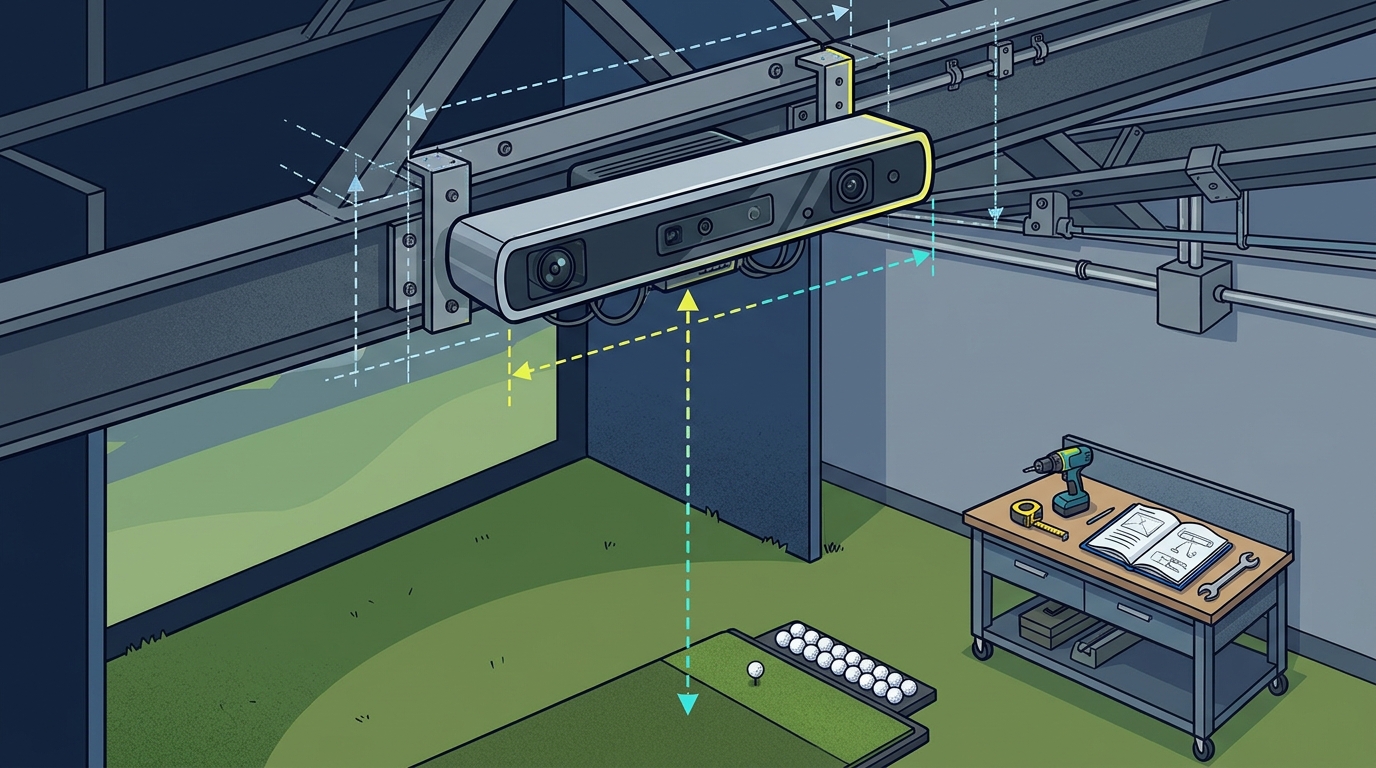
Commercial spaces often have unique architectural constraints that ground-based monitors ignore. An overhead system requires a clear line of sight from the ceiling to the hitting mat. You must measure the vertical distance from the floor to the mounting point. Most high-speed camera systems require a minimum ceiling height of 10 to 12 feet to capture the full trajectory of a driver shot. If your space has a lower ceiling, the system may clip the apex of the ball flight, resulting in incomplete data. Evaluating room dimensions during the pre-purchase phase ensures the chosen hardware fits the physical envelope of your bay.
Structural integrity is equally important. The monitor must be securely anchored to the ceiling joists or a dedicated mounting plate. Standard drywall anchors are insufficient for the weight and vibration of high-speed cameras. You need to verify that your ceiling can support the load. A professional installation service can assess the structural capacity and provide the necessary hardware. This prevents safety hazards and ensures the camera remains level during operation.
Accuracy and Data Consistency
Accuracy is the primary selling point of any launch monitor, but consistency matters more in commercial settings. Data consistency is the ability of a tracking system to produce identical results for the same swing repeated multiple times. In a commercial facility, multiple users will hit balls with varying club speeds and spin rates. The system must handle this range without drift or calibration errors. High-speed cameras typically offer superior accuracy for short game shots compared to radar units. This is because they track the ball from the moment of impact, whereas radar units may lose track of slow-moving wedges.
You should request a data sheet that specifies the accuracy range for different club types. Look for systems that maintain sub-1% error margins across the full spectrum of shots. Curating only tour-validated systems that meet these standards ensures that the data your customers receive is reliable and actionable.
Software and Multi-User Management
Installation and Maintenance
Installation of an overhead monitor is more complex than placing a radar unit on the floor. The camera must be aligned precisely with the hitting zone. Misalignment can cause tracking errors that are difficult to diagnose. Professional installation ensures that the camera is level and focused correctly. Full-cycle support, including pre-purchase layout checks and post-delivery install support, guides your entire build from concept to completion. This reduces the risk of installation errors and ensures a smooth launch.
Key Takeaways
- Verify ceiling height and structural load capacity before purchasing an overhead monitor.
- Prioritize data consistency and multi-user software features for commercial use.
- Calculate total cost of ownership, including software licensing and maintenance.
- Choose a provider that offers professional installation and ongoing support.
- Curating tour-validated systems with transparent pricing is essential for commercial success.
Frequently Asked Questions
What is the minimum ceiling height for an overhead launch monitor?
Most high-speed camera systems require a minimum ceiling height of 10 to 12 feet. This ensures that the camera can capture the full trajectory of a driver shot. If your ceiling is lower, you may need to consider a ground-based radar unit instead.
How do I secure an overhead monitor to the ceiling?
You must anchor the monitor to the ceiling joists or a dedicated mounting plate. Standard drywall anchors are not sufficient. A professional installer can assess the structural capacity and provide the necessary hardware.
What software features are essential for commercial use?
How much does an overhead launch monitor cost?
Can I install an overhead monitor myself?
While it is possible to install an overhead monitor yourself, professional installation is recommended. Misalignment can cause tracking errors that are difficult to diagnose. Full-cycle support, including professional installation and ongoing maintenance, is recommended for commercial spaces. Learn more: Our company.