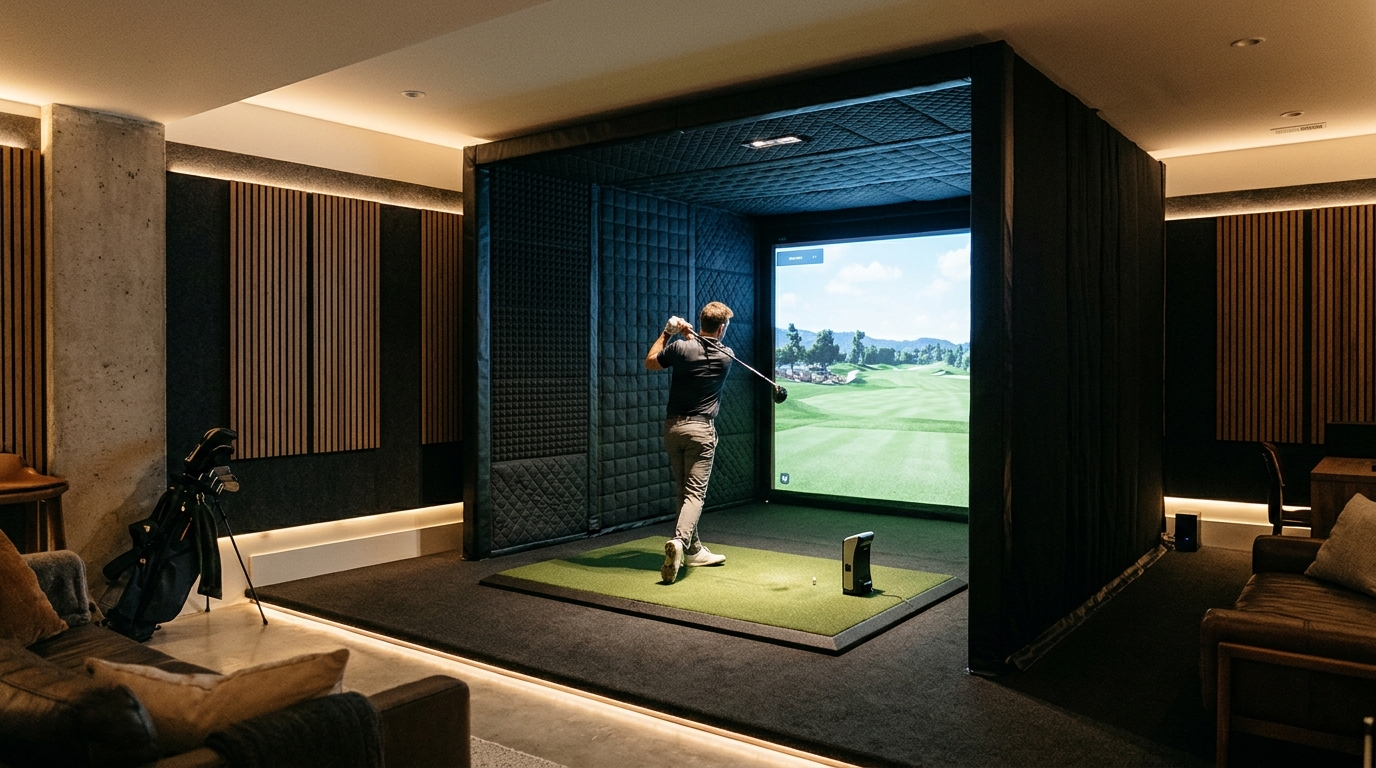
Yes, soundproofing is worth adding to a home bay if you practice late at night or share walls with neighbors. Noise insulated golf simulator enclosures work by combining mass-loaded vinyl, acoustic foam, and sealed frames to dampen the sharp impact of a golf ball. Turnkey Pro Studios designs these systems to turn a garage or basement into a quiet, professional-grade practice space without requiring major construction.
The Physics of Golf Ball Impact
Understanding why golf simulators are loud requires looking at the energy transfer of a strike. A standard driver swing can generate significant impact forces. This sudden release of energy creates a high-frequency shockwave that travels through the air and into the structure of your home. Without mitigation, this sound is often described as a loud, sharp crack that can be heard through drywall and even through floors.
The frequency of this sound is critical. Most of the noise from a golf ball hitting a mat or screen falls within a range where human hearing is most sensitive. Consequently, even a moderate decibel level can feel piercingly loud to the human ear. This is why standard drywall or a simple curtain fails to stop the noise effectively.
How Enclosures Dampen Sound
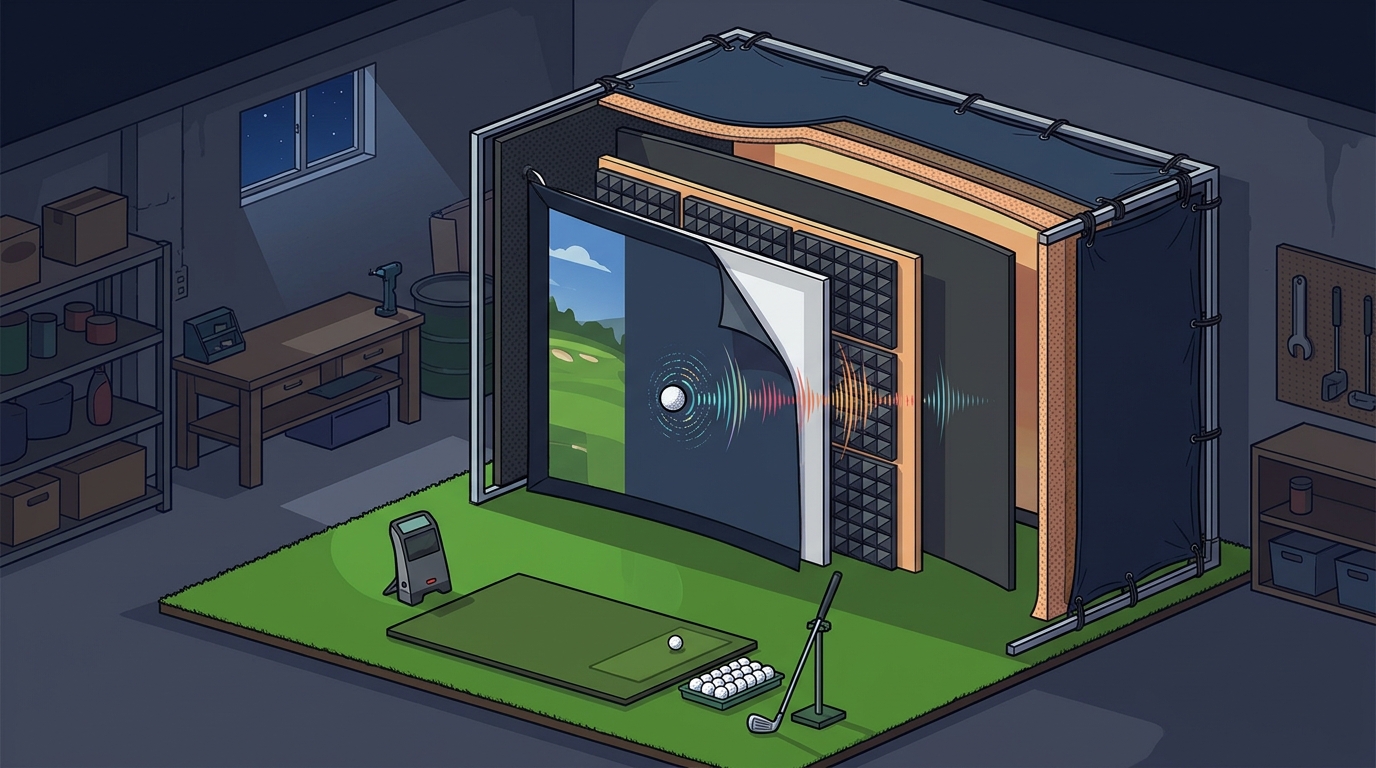
A noise insulated golf simulator enclosure is a specialized structure designed to absorb, block, and dissipate acoustic energy. These systems typically use a multi-layer approach rather than relying on a single material. The first layer is usually a heavy, dense material like mass-loaded vinyl (MLV). MLV adds significant weight to the walls, which prevents sound waves from passing through by forcing them to lose energy as they try to vibrate the material.
Inside the enclosure, acoustic foam or mineral wool is often used to absorb the sound that does enter the space. This prevents the noise from bouncing around the room and creating an echo chamber. The frame of the enclosure must also be rigid. If the frame flexes, it acts like a speaker cone, amplifying the sound rather than blocking it. Turnkey Pro Studios utilizes proprietary Smart Frameworks that ensure structural rigidity while allowing for easy assembly in residential spaces.
The Role of Impact Screens
The screen is the primary point of impact, and its material composition dictates the baseline noise level. A standard single-layer screen will transmit most of the impact energy directly into the frame. In contrast, a triple-layer screen, such as the Stealth Quiet™ system, is engineered to absorb that energy. The outer layer stops the ball, the middle layer dissipates the shock, and the inner layer provides a stable surface for the projector image.
By using a screen that is specifically designed for noise reduction, you reduce the initial decibel output before the sound even reaches the walls. This makes the job of the enclosure walls significantly easier. You do not need to build a bunker if your screen is already doing half the work. This synergy between the screen and the enclosure is a key component of a well-designed simulator package.
Commercial vs. Home Requirements
Commercial facilities like sports bars or luxury resorts have different acoustic needs than a home garage. In a commercial setting, the goal is often to contain noise so it does not disturb adjacent bays or the dining area. These spaces often use flush-to-wall enclosures that integrate with the existing building structure. For a home user, the goal is usually to prevent noise from traveling to the bedroom or the neighbor's house.
Home enclosures often prioritize flexibility. A retractable or modular system allows you to open up the space when you are not practicing. This is crucial for homeowners who use their garage for storage or their basement for family activities. The enclosure must be able to seal tightly when closed to block sound, but it must also be easy to open and close. This balance between acoustic performance and usability is the hallmark of a high-quality home simulator bay.
Is Soundproofing Worth the Investment?
The value of soundproofing depends on your specific living situation and practice habits. If you live in a detached house with a detached garage, you may not need a fully insulated enclosure. However, if you are in an apartment, a townhouse, or a garage attached to your main living space, soundproofing is essential. The cost of a noise insulated enclosure is higher than a basic frame, but it is far less than the cost of renovating your home or dealing with noise complaints from neighbors.
Consider the long-term value. A well-insulated bay allows you to practice at any hour without worrying about disturbing others. This consistency leads to better skill development. The investment in a quality enclosure protects your social relationships and your ability to practice freely. It transforms the simulator from a potential nuisance into a dedicated, private training facility.
Key Takeaways
- High-frequency impact sounds from golf balls are difficult to block with standard building materials.
- Mass-loaded vinyl and rigid frames are the most effective components for blocking sound transmission.
- Triple-layer screens significantly reduce the initial noise generated by the ball impact.
- Commercial enclosures focus on containing noise between bays, while home enclosures focus on isolating the room.
- Soundproofing is worth the cost if you share walls, live in an apartment, or practice late at night.
- Flexibility is key for home users; the enclosure should be easy to open and close.
Frequently Asked Questions
How much noise does a golf simulator make?
A standard golf simulator can produce impact sounds that are quite loud. This is comparable to the noise level of a leaf blower or a chainsaw. The exact level depends on the club used, the ball speed, and the materials of the screen and mat. Without insulation, this noise is easily heard through standard drywall.
Can I use a regular garage door as a sound barrier?
A standard garage door is not an effective sound barrier for high-frequency impact noise. While it may block some low-frequency rumble, it will not stop the sharp crack of a golf ball. You need a dedicated enclosure with sealed edges and dense materials to effectively contain the sound. A garage door will likely let most of the noise escape into the driveway or the house.
Do I need to soundproof the floor as well?
In many cases, yes. The impact of the ball on the mat creates vibration that travels through the floor structure. If you are in a basement, this vibration can be felt in the floor below. Adding a thick, dense mat or a floating floor system can help isolate the vibration. This is especially important if you have neighbors living directly below your practice space.
What is the difference between sound absorption and sound blocking?
Sound absorption reduces the amount of sound that bounces around inside a room, while sound blocking prevents sound from passing through a barrier. A good enclosure uses both. Absorption materials like foam reduce echo and reverb inside the bay. Blocking materials like mass-loaded vinyl prevent the sound from traveling through the walls to the outside. You need both for a quiet practice environment.
Is a noise insulated enclosure worth it for a commercial business?
For commercial businesses, noise insulation is often a requirement rather than an option. Customers expect a quiet, professional environment. If your simulator bays are next to each other or next to a dining area, you need to contain the noise. A well-designed commercial enclosure enhances the customer experience by creating a focused, immersive atmosphere. It also allows you to operate the facility for longer hours without disturbing the surrounding area.
Can I build a noise insulated enclosure myself?
Yes, but it requires careful planning and the right materials. You need to ensure that the frame is rigid and that all seams are sealed. Using pre-fabricated components from a specialized retailer can simplify the process. These kits are designed to fit together easily and provide the necessary acoustic performance. DIY is possible, but buying a turnkey package ensures that all the components are compatible and tested for performance.
Conclusion
Investing in a noise insulated golf simulator enclosure is the smartest way to protect your home environment while maximizing your practice time. By understanding the physics of impact and choosing the right materials, you can create a silent, professional-grade bay in your garage or basement. Turnkey Pro Studios offers a range of turnkey packages that integrate these acoustic solutions with top-tier launch monitors and screens. Explore our Build Your Own section to configure a system that fits your specific room and noise requirements. Visit Turnkey Pro Studios to find the perfect balance of performance and quiet for your home or business.